Choosing the right industrial motor is crucial for your operations. Whether you're in manufacturing, logistics, or energy, the motor you select can impact efficiency and costs. Understanding how to choose the right industrial motor is not just a technical task; it involves experience and the right knowledge.
Factors such as voltage, speed, and load capacity play significant roles. Each application has unique demands. Picking the wrong motor can lead to subpar performance and higher energy consumption. It is often easy to overlook details, such as compatibility and maintenance needs, yet these can be essential for performance longevity.
Many users feel overwhelmed when faced with so many options. A thoughtful approach can yield better results. Stay informed about the latest motor technologies and industry trends. This not only helps in making informed decisions but also enhances reliability in your operations. Knowing how to choose the right industrial motor is an informed strategy that pays off in the long term.
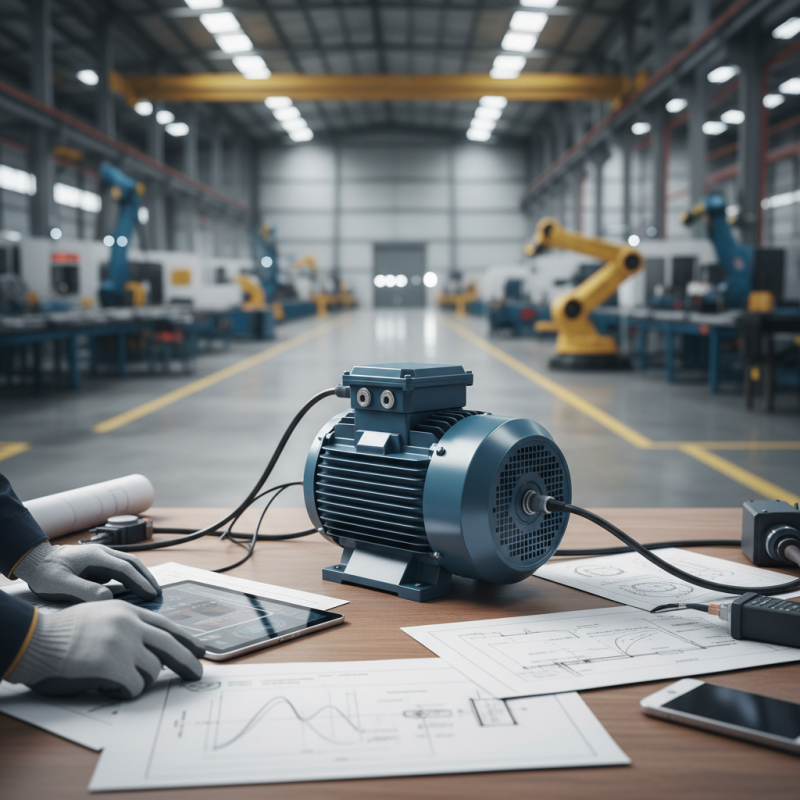
When selecting an industrial motor, understanding your specific application requirements is crucial. Different operations demand various motor capabilities. For instance, conveyor systems typically require high torque characteristics. In contrast, pumps may necessitate motors with variable speed functionality. According to a 2021 industry report, 60% of failures in motor applications stem from misalignment between motor specifications and operational needs.
Power ratings, efficiency, and duty cycle should also be considered. A motor with a power rating too low for heavy loads may lead to overheating and premature failure. The U.S. Department of Energy reports that inefficient motors account for nearly 70% of energy consumption in industrial applications. Choosing a more efficient motor can significantly reduce operational costs, making it essential to evaluate energy needs carefully.
Understanding environmental conditions is another vital aspect. High temperatures and humidity can affect motor performance and longevity. Motors designed for harsh environments can be more resilient but may come at a higher initial cost. The distinction between standard and specialized motors can influence maintenance needs and overall operational reliability. It's critical to weigh these factors before making a selection. This process can make the difference between efficient operations and costly downtime.
When choosing an industrial motor, understanding motor specifications is crucial. Power, speed, and torque are key parameters to consider. A report by the International Electrotechnical Commission states that 80% of industrial energy consumption is attributed to electric motors. Selecting a motor that precisely meets your application needs can enhance efficiency significantly.
Power ratings determine how much work the motor can perform. Higher power typically translates to better performance but can also increase costs. Consider the operational environment. Does the motor need to work in extreme conditions? For example, certain motors can maintain efficiency in temperatures ranging from -20°C to 40°C.
Speed is another critical factor. It governs how fast the motor operates. Standard motors run at 1,750 or 3,600 RPM. However, frequency inverters allow for variable speed control, optimizing performance. Torque is also essential, defining the motor's ability to handle loads. Application requirements may demand high startup torque or consistent torque under varying loads. Balancing these parameters is essential, and incorrect choices can lead to inefficiencies or failures, highlighting the importance of proper evaluation.
When selecting an industrial motor, understanding environmental factors is crucial. Different settings can drastically affect motor performance and lifespan. Factors such as humidity, temperature, and dust levels play significant roles in motor selection. For instance, a motor in a humid environment faces corrosion risks. Choosing a motor with adequate protection simplifies maintenance and improves reliability.
Noise pollution is another aspect worth considering. For applications near residential areas, a quieter motor is preferable. Evaluate local regulations about noise levels. This can influence not only your choice but also your relationship with the community. Additionally, consider energy efficiency. Motors consuming less energy contribute to sustainability goals. Weigh the costs against potential savings over the motor's lifetime.
Furthermore, think about installation space. In cramped quarters, a compact motor design is beneficial. Ensure it remains accessible for future repairs. Reflect on your facility's unique challenges. Each environment presents its own set of conditions. A one-size-fits-all approach rarely works. Adapt your selection process to fit your specific needs. Each detail matters in crafting an effective solution.
When selecting an industrial motor, understanding the types available is crucial. Industrial motors come in various kinds, each serving unique functions. Common types include AC motors, DC motors, and servo motors. AC motors are ideal for applications needing constant speed and power. They are widely used in fans and pumps. DC motors offer better speed control, making them suitable for robotics and conveyance systems.
Servo motors are designed for precision control. They are crucial in automation processes where accuracy matters. Each motor type has its strengths and weaknesses. For instance, AC motors are generally more reliable, yet less flexible in speed adjustments. In contrast, DC motors may require more maintenance over time. The choice of motor should reflect your specific requirements.
Before making a decision, consider factors such as torque needs, speed variations, and environmental conditions. Though manufacturers provide detailed specifications, real-world performance can vary. It's essential to reflect on past experiences and seek advice from veterans in the field. Balancing technical needs with practical insights can lead to a more informed choice.
This bar chart illustrates the efficiency ratings of different types of industrial motors. Selecting the right motor involves understanding these ratings to ensure optimal performance for your specific needs.
When budgeting for industrial motors, initial costs are just the beginning. According to industry reports, maintenance can account for up to 30% of the total operating costs over the motor's lifespan. Choosing a motor that balances upfront expense with long-term maintenance is critical.
Consider the efficiency ratings. Higher efficiency motors often come with a higher price but save on energy costs. A motor running at 90% efficiency over 10 years can save businesses thousands in electricity compared to one at 70% efficiency. This emphasizes the importance of examining both the purchase price and potential savings.
Additionally, maintenance practices can vary significantly. Some motors require specialized servicing, which can be more costly. Research shows that preventive maintenance can reduce unexpected downtime by 50%. Look for motors with accessible parts for easier service. An informed choice today can yield significant benefits down the line.
: Different operations have unique motor needs. Misalignment between motor specs and operational demands can lead to failures.
A low power rating can cause overheating and premature motor failure. This issue should not be overlooked.
Inefficient motors can account for up to 70% of energy consumption. Choosing efficient options can significantly lower costs.
Humidity, temperature, and dust levels all affect performance. Each factor can impact motor lifespan and reliability.
For applications near residential areas, quieter motors are preferred. Local noise regulations can guide your choice.
Cramped spaces may require compact motor designs. Ensure accessibility for repairs and adapt to your facility's conditions.
Yes, motors designed for harsh environments can improve reliability and reduce maintenance needs over time.
High humidity and temperature can lead to corrosion. Proper protection simplifies upkeep and enhances performance.
Ensure that the motor design allows easy access for maintenance. This is critical for long-term operational efficiency.
No, each application is unique. Tailoring your selection process is essential to meet specific operational needs.
Choosing the right industrial motor is crucial for optimizing operational efficiency and meeting specific application needs. To understand how to choose the right industrial motor, it’s essential to first assess your application requirements, including the intended use and load demands. Evaluating motor specifications such as power, speed, and torque will further guide selection, ensuring compatibility with your machinery.
Additionally, environmental factors like temperature, humidity, and potential exposure to chemicals should be considered, as they can significantly impact motor performance and lifespan. It’s also important to explore various types of industrial motors available and to budget not only for the initial purchase but also for ongoing maintenance costs. By thoroughly analyzing these elements, one can make an informed decision that aligns with both operational needs and financial considerations.

KPR Motor